Orcas and aurora
environmentmarine lifesnorkelingorcasaurora
0 views - 0 viewers (visible to dev)

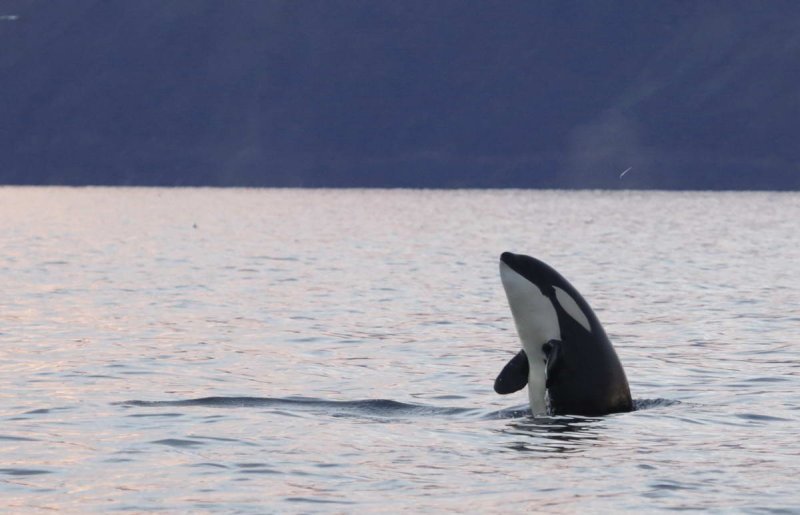
A winter trip to the Norwegian Arctic When the days get shorter and the temperatures drop below zero, an incredible amount of herring is forced into the fjords of northern Norway. They are followed by predatory fish, seabirds and whales - especially orcas and humpback whales, who do not want to miss "the Grand bouffe". The Norwegian population is expected to include around 1,500 orcas. At least 1,200 of them follow the herring on its hike in the north-east Atlantic. There are only more orcas in Antarctica than here, and in contrast to the southernmost continent, the orcas often gather in a few fjords in winter. The best conditions for getting close to the animals in their natural habitat and maybe even seeing them under water. Even if the water is not exactly tropical-warm at four to six degrees - the Gulf Stream extends into these northern latitudes of 70 ° N and even up to Svalbard. This means that the Norwegian coast is ice-free all winter. At the same time, the lack of sunlight and the low temperatures ensure clear water, i.e. good visibility. The orcas and humpback whales approach the boats (and also snorkelers) - with a little luck and skill of the boat guide - up to a few meters. Male orcas are up to eight meters long, and the mighty back fin rises up to two meters. The orcas prey the herring in big (family) groups. The oldest female is in charge - experience and not strength counts here. The herring is encircled and panicked by air bubbles, sounds and the targeted use of the white belly side of the orcas. The herrings huddle together and form a so-called "bait ball". Individual orcas now swim into the shoal and perform a "tail slap" - they suddenly perform a kind of somersault, in which they hit the bait ball with the fluke (tail fin). On average, this action can kill or stun up to 30 fish. Now everyone can eat in peace. The orcas hunt so effectively that they can allow themselves to be picky and not even eat the heads of the little fish. These are spit out again. It is not uncommon for humpback whales to sabotage the coordinated feeding actions of the orcas. If a bait ball forms, they use the opportunity and swim through with their mouth wide open. They press the water between the baleen and filter out the herring. On average, it can be a few hundred kilograms of fish at one go. In contrast to the orcas, the humpback whales make long migrations between the northern areas with plenty of food and the tropical areas where they give birth to their young. So you also have to eat up reserves. Nevertheless, it is surprising that orcas and other whales are so peacefully chasing herring together. In other areas, orcas kill and eat humpback, minke, fin and even blue whales. However, we have already seen orcas in Norway that kill porpoises. Apparently, this behavior does not serve to eat the little dolphins for the orcas that specialize in herring, but rather it is a (hunting)game for the black and white whales (which usually kills the porpoise). Now the question may be "Is it a good idea to go into the water with these predators?" However, there have been no incidents so far that would prove that it is a bad idea, because unlike captive orcas wild orcas have not shown aggressive behavior towards humans. Often they are rather indifferent, sometimes they dodge boats and divers, and not infrequently they swim towards us to see what we are doing. The elegant marine mammals may also feel pity and surprise when they see the wildly struggling figures in the water. Aurora and arctic winter light: an unforgettable experience The arctic winter light is an unforgettable experience. In orange-golden rays it falls through the valleys into the fjord. Dramatic, snow-covered mountain peaks are surrounded by a corona. Red, violet, blue - within a few hours of daylight, the dominant colors often change from minute to minute. And that's not all. With a little luck, the play of light will continue after sunset. Depending on the degree of cloudiness and sun activity, the Northern Lights dance can be observed in these latitudes. To be fair, you have to say that they don't always dance. It is often a green veil on the northern horizon that you have to be satisfied with. But there are also these weeks when it is almost annoying to go out into the cold in the evening. Waves of red and green light race across the firmament - you don't want to miss any of it, but at some point - well after midnight - your hands and feet get too cold. And you also need a little sleep before heading out to the fjord in the morning to experience the wild spectacle of orcas, humpback whales and herring. The Norwegian expedition provider Northern Explorers AS can look back on almost 15 years of experience in snorkeling and diving with orcas and was thus one of the first operators for this kind of experience. The tours take place in November and January (in December the lack of daylight limits the possibilities). Tours with small boats and groups (4 to 5 participants) are offered, as well as safaris with a sailing ship with a maximum of 10 participants. Since the season is limited to a few really good weeks, it is advisable to book early. Photos: Uli Kunz and Sven Gust