New knowledge: There are three types of electric eels
environmentbiodiversityelectric eelsamazon rainforestgenetic research
0 views - 0 viewers (visible to dev)
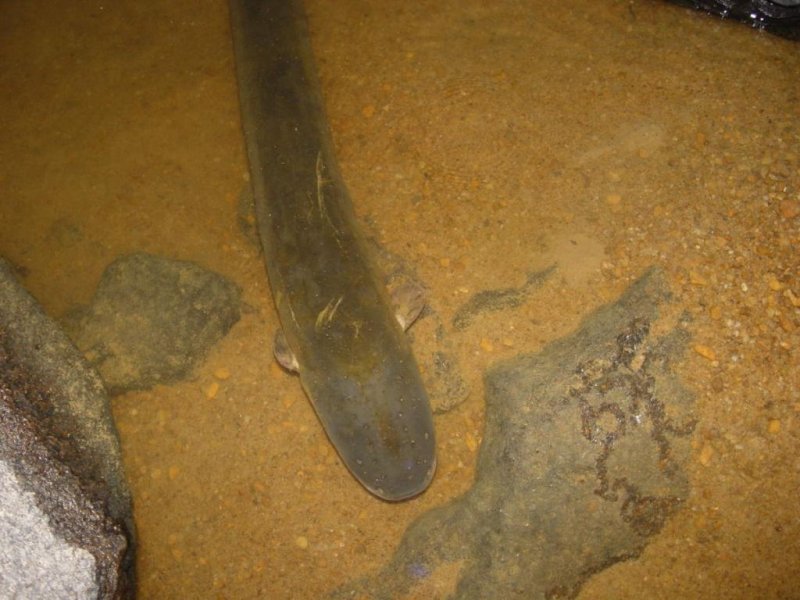
Electrophorus electricus, Wonotobo (c) R. Covain
Study documents the most powerful biologically produced electric shock South American rivers host at least three different types of electric eels, including a newly identified one that is capable of producing a more powerful electrical shock than any other known animal. This resulted in an analysis of 107 specimens collected in recent years in Brazil, French Guiana, Guyana and Suriname. For more than 250 years scientists have known that electric eels shock their prey in the Amazon basin with electricity. They are widespread in swamps, streams and rivers throughout northern North America and have long been considered one species. However, with modern genetic and environmental analyzes, Smithsonian's National Museum of Natural History researchers have discovered that Amazon electric eels belong to three distinct species that evolved from a common ancestor millions of years ago. The findings have now been published in the journal Nature Communications. The Amazon Rainforest is a hotspot of Earth's biodiversity. "The eels are seven to eight feet long and they are really eye-catching," says study leader C. David de Santana. "After 250 years of scientific research, if you can discover a new eight-foot-long fish, can you imagine what else to discover in this region?" About 250 species of power-producing fish are known in South America, with eels (which are actually fish with an eel-like appearance) the only ones using their energy for hunting and self-defence. Like other electric fish, they also navigate and communicate with the electricity they generate. De Santana, together with colleagues, studied the electric eels that he and his colleagues had collected in the Amazon over the last six years. All of them looked pretty much alike. De Santana found no external features on the fish that at first sight clearly distinguished different groups, and turned to the DNA of the animals and found genetic differences that suggested that his 107 specimens represented three different species. When re-examining the animals with the present genetic results, he found subtle physical differences corresponding to the three genetic groups. He found that each species has its own unique skull shape, defined features on the pectoral fin and a pronounced arrangement of pores on the body. Each species also has its own geographical distribution. The long-known Electrophorus electricus, once considered widespread, seems to be confined to the highlands of the Guiana Shield, an ancient geological formation in which clear water flows over rapids and waterfalls. Electrophorus voltai, one of the two newly discovered species, lives mainly further south on the Brazilian Shield, a similar highland region. The third species, Electrophorus varii, named after the late ichthyologist Richard Vari, floats through murky, slow-flowing water in the Amazonas plains. Based on genetic comparisons, de Santana and colleagues found that about 7.1 million years ago in South America, two groups of electric eels began to develop. The one, the common ancestor of E. voltai and E. electricus, lived in the clear waters of the old highlands, while E. varii lived in the plains, whose murky waters were full of minerals and therefore derived electricity more efficiently - an obviously important difference for electric eels, their electric shock in low-conductivity environments does not go that far. According to the analysis, E. voltai and E. electricus diverged about 3.6 million years ago when the Amazon changed course, crossed the continent and crossed highland regions. In particular, the de Santana team discovered that E. voltai can discharge up to 860 volts of electricity - much more than the 650 volts generated by E. electricus. This makes the species the strongest known bioelectric generator and may be an adaptation to the lower conductivity of highland water. Video Electric eel: https://youtu.be/JMiIkcU8qfo
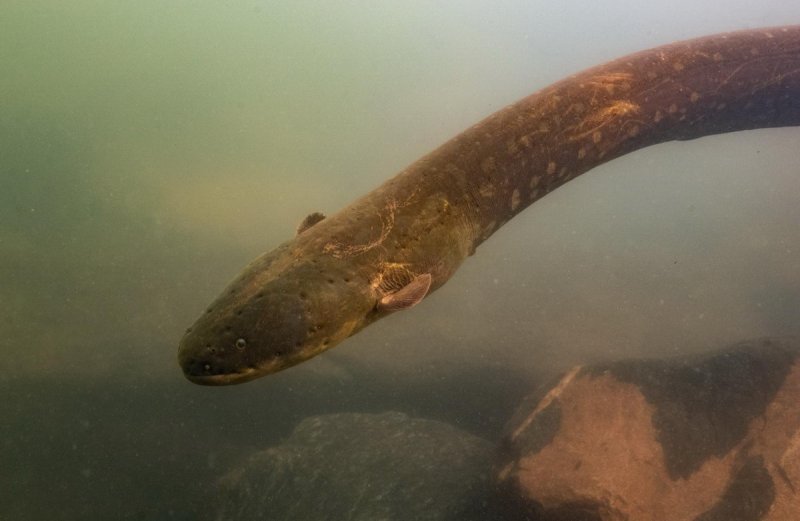
Electrophorus voltai, Xingu River (c) L. Sousa
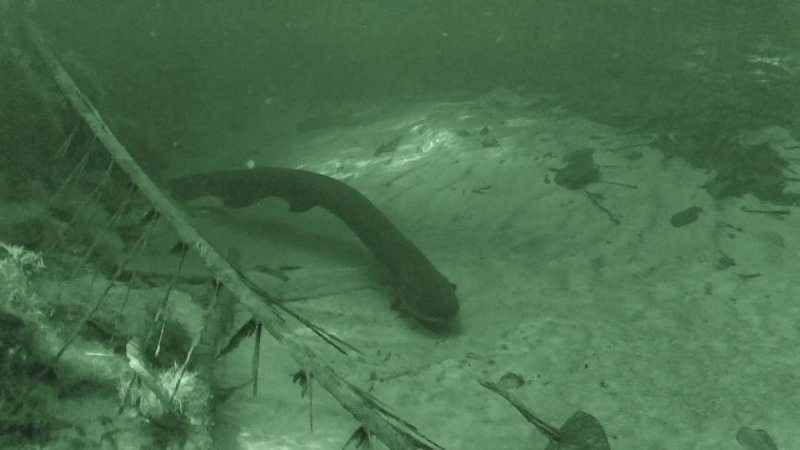
Electrophorus varii, Rio Negro (c) D. Bastos