Freediving: apnea and meditation
marine lifefreedivingapnearelaxationmeditation
0 views - 0 viewers (visible to dev)

Freediving: apnea and meditation
(c) Phil Simha
What's so cool about holding your breath? My name is Nik Linder. I was a co-owner of a big dive shop in Freiburg. Judging by appearances, it may appear as if I have made my hobby my new business. I had left a dream job, with nice customers, friendly colleagues in one of the most beautiful cities in Germany (possibly the world). In March 2016, I sold the shop to my partner Axel. I was inspired by the idea of "holding my breath" to earn money. There was no doubt that this was my path in life and that I needed to convey my message to the world.
Being so confident of my idea, critical questions often cause me to be perplexed because I have a hard time putting myself in the shoes of people who have a different perspective than me or do not know why it's great to freedive. This little introduction for the readers of taucher.net will hopefully encourage you to book a freedive or Relaqua course, or to buy the book written by Phil Simha and myself ;-)
The art of a breathing break People who want to freedive soon learn that we do not speak of "holding one’s breath," but of taking a break from breathing. Yogis use this term in pranayama, which is the breathing part of yoga. In these breathing pauses, Man opens a window inwards. This introspection and self-contemplation is called meditation. When I am within myself and my breathing, my thoughts do not dance around confused. Those who are not within themselves experience the classic "thought carousel," "hamster wheel," "head cinema," "feeling driven… however you want to call it. Those who are often within themselves are not so susceptible to mental fatigue, burnout, depression, insomnia, back problems, heart problems, choleric seizures, and many other maladies.
Those who learn about breathing pauses first learn to breathe the right way. This is done through the nose (nasal breathing filters, tempers and moisturises the air) and into the stomach (abdominal breathing calms one down). Those who switch from unconscious respiration (controlled by the respiratory centre in the brain) to conscious breathing have the perfect tool to purify their lungs, to improve concentration, to revitalise – and to descend. In addition, being "one with the breathing" helps one to recognise stress faster, because breathing becomes flatter. You can use abdominal breathing or conscious breathing to relieve stress faster.
Feeling good in the water A freediver sees himself less as a guest in the underwater world, but as being similar to marine mammals which also need to surface for air. Freediving sessions are shorter in duration than scuba diving ones, but much more intense. And, interacting with whales, dolphins, sharks, manta rays becomes so much easier.
In a practical sense, knowing that you can hold your breath for a few minutes can even help scuba divers become more relaxed, because the worst case scenario – that of not having air – is no longer considered a problem. In freediving or Relaqua – a relaxation technique that combines the skills of yoga and freediving to meditate while in the water (more at www.relaqua.de) – we also draw our attention on the water as the perfect environment to meditate in.
In the water, we feel weightless. Add to this the fact that we do not hear sounds from the surface – or that such sounds are muffled – allows us to take a short vacation from the hectic world. Thus, freedivers do not see water as something life-threatening. This may sound like an exaggeration, but many scuba divers are very mindful of worst case scenarios so they can be prepared in an emergency. There are also other aspects such as well-being in the water, which is often inadequate in scuba divers. Skill transfers to everyday life or other sports
In my freediving courses, and especially in Relaqua, it is always about using these techniques in everyday life. Freedivers, having achieved complete control over their bodies and breathing, have developed the ability to completely relax within a second.
Besides this, freedivers – even beginners – experience the following benefits: the lungs become more developed and powerful, while being cleansed at the same time; the freediver becomes more balanced and confident, and also develops a more positive attitude to life… Such are the positive aspects of freediving that non-professional freedivers, scuba divers and other athletes find fascinating and interesting.
And so, now you know what’s so great about holding your breath underwater!
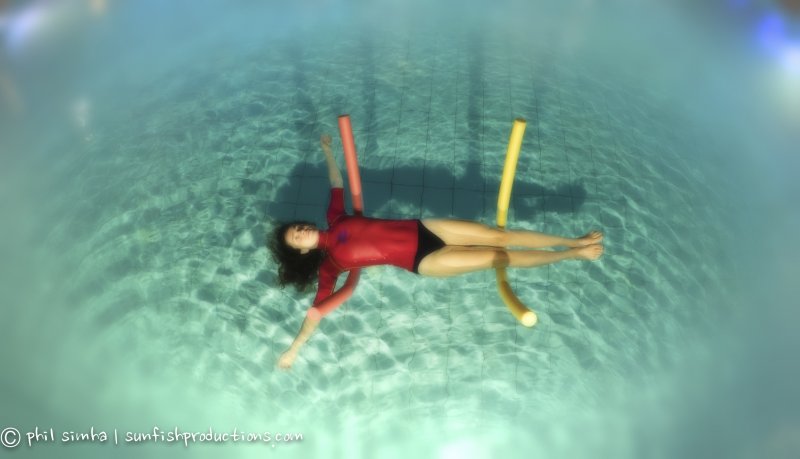
Freediving: apnea and meditation
(c) Phil Simha

The book by Nik Linder & Phil Simha

Nik Freediving with a Manta Ray
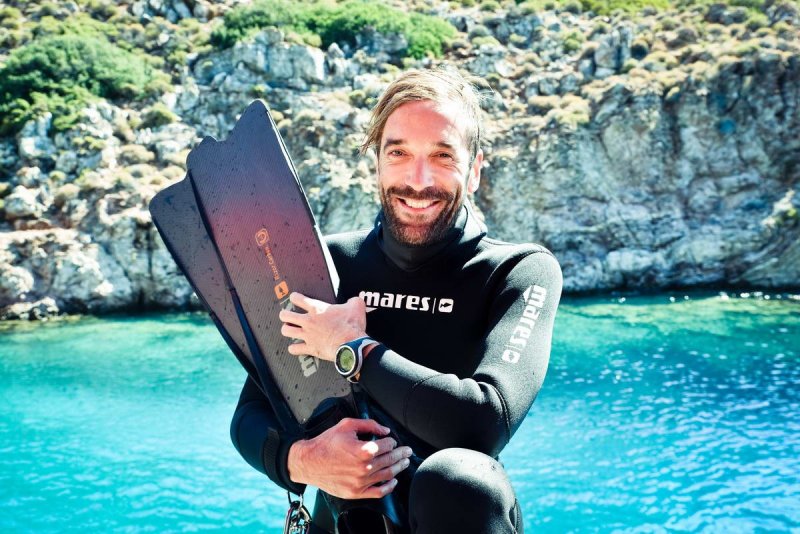
Nik Linder
(c) Alena Zielinski